



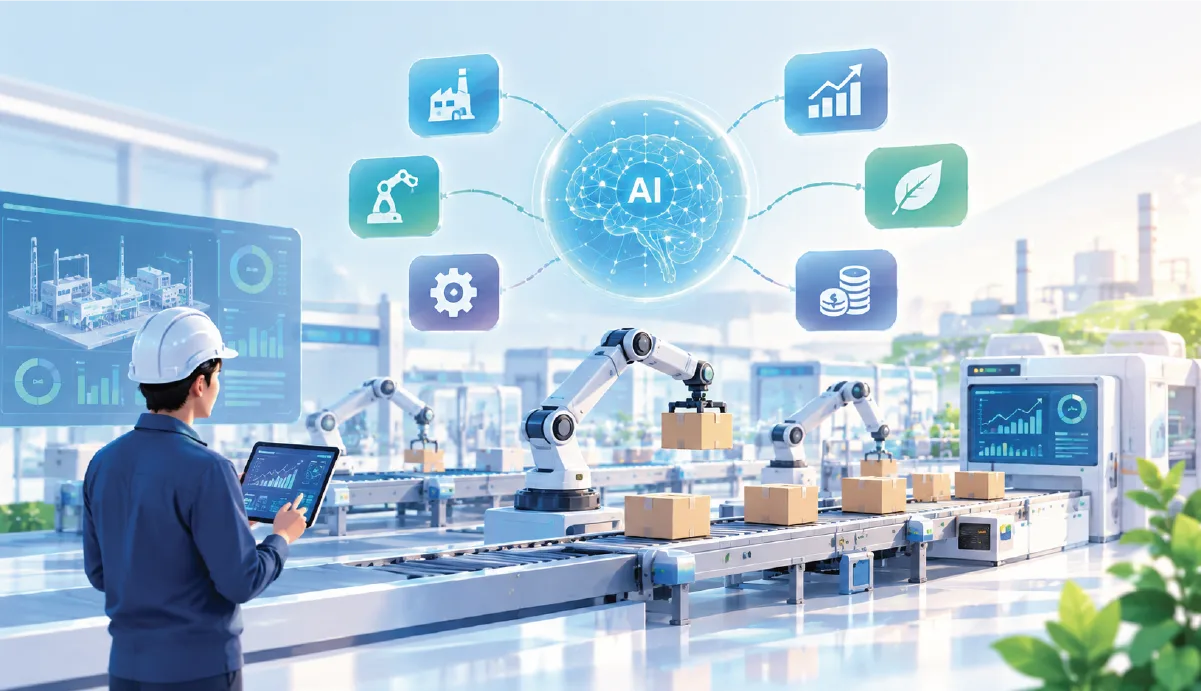
The AI Problem Factories Don’t Talk About
Inspired by the smart manufacturing architectures and industrial automation framework detailed in Artificial Intelligence in Manufacturing by John Soldatos.
A manufacturer spends a decade building AI into its production line. Vision systems catch defects. Predictive models flag machines before they fail. The technology works. And yet, quietly, operators start ignoring what it tells them.
Not because the AI is wrong. Because they don’t understand why it’s saying what it’s saying — and when a recommendation contradicts their gut instinct, gut instinct wins. Bit by bit, an expensive, technically sound system gets bypassed by the very people it was built to help.
This is one of the real stories buried inside Artificial Intelligence in Manufacturing, a research collection edited by John Soldatos that pulls together findings from more than a dozen EU-funded industrial AI projects. It happened at Whirlpool. And it’s the kind of failure that doesn’t show up in a product demo, because it isn’t a failure of accuracy. It’s a failure of trust.
Not Your Typical AI Book
This isn’t a book written to sell you on AI, and it isn’t a doom-laden warning about it either. It’s closer to a field report — dozens of European researchers and engineers describing what actually happened when they put machine learning, robots, and predictive systems onto real factory floors, at real companies: Ford, Whirlpool, CNH Industrial, an automotive bearings manufacturer called Fersa. No polish, no sales pitch. Just what worked, what didn’t, and what surprised them.
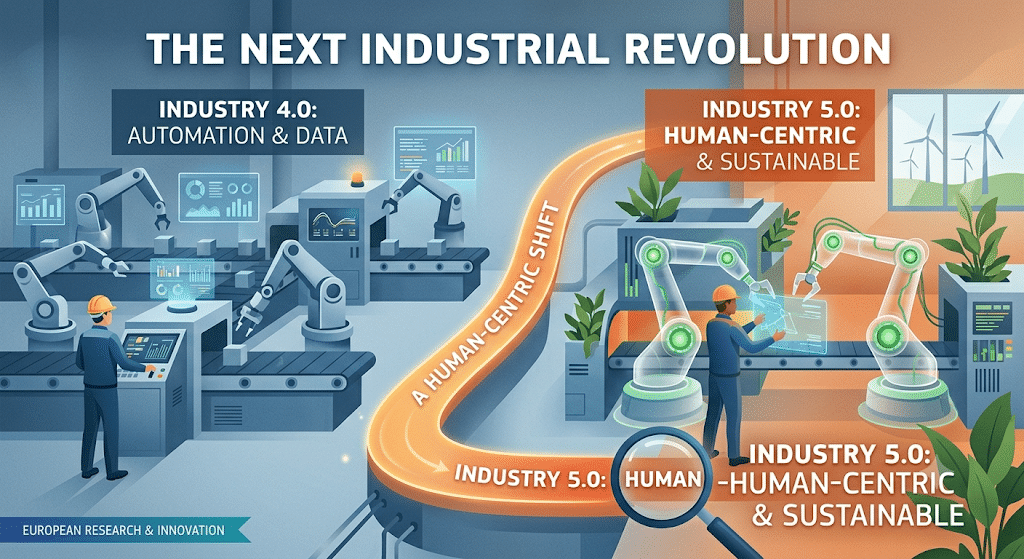
The organizing idea running through all of it is a shift the manufacturing world has started calling Industry 5.0. If Industry 4.0 was about making factories smarter and faster through automation and data, Industry 5.0 is a course correction: a recognition that speed and efficiency alone aren’t the whole goal. The humans working alongside these systems, and the trust between people and machines, turn out to matter just as much as the algorithms themselves.
That distinction sounds almost like a footnote. It isn’t. It’s the thread that ties together nearly everything interesting in this book.
The Machine Was Right. Nobody Believed It.
Here’s the pattern that shows up again and again across these case studies, in different factories, different countries, different products: the AI performs well on paper, and still gets sidelined.
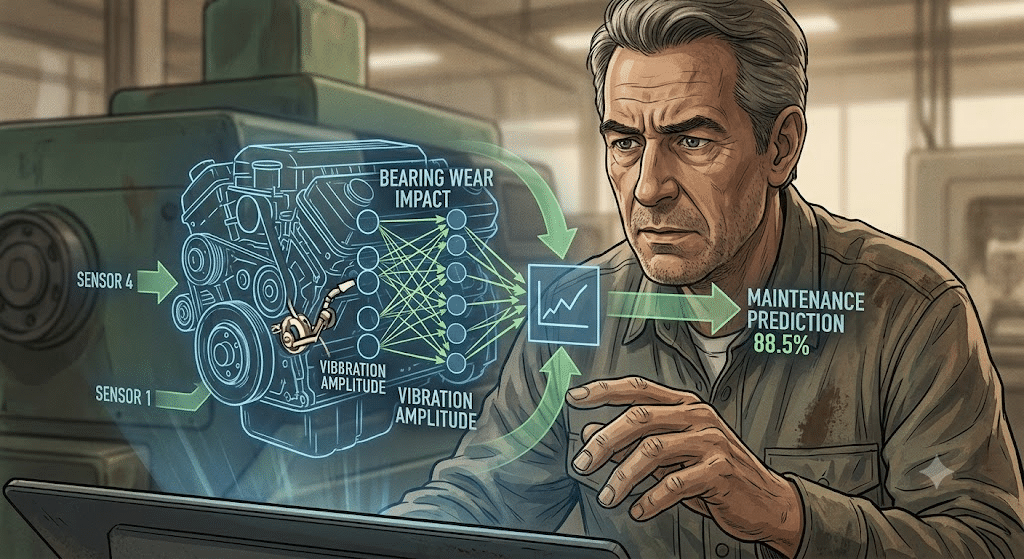
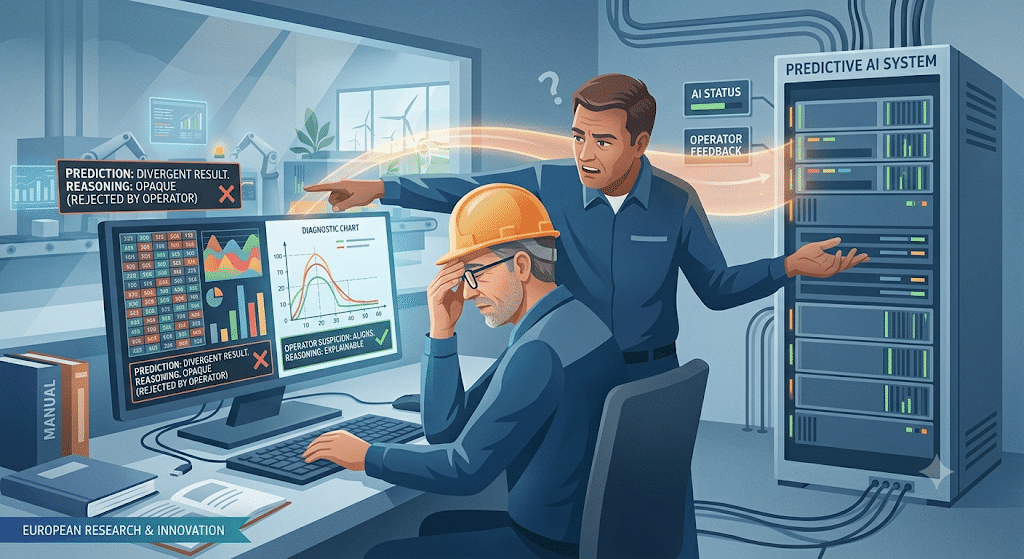
At Whirlpool, engineers had been applying AI to manufacturing for over a decade — first for quality control, later for demand forecasting. But success didn’t compound the way you’d expect. Each new deployment ran into the same wall: workers didn’t fully understand how the AI reached its conclusions. When a prediction lined up with what an experienced operator already suspected, fine. But when it diverged — when the model said something counterintuitive — people’s confidence didn’t hold. Some began quietly working around the system rather than through it.
That’s a strange kind of failure. The model wasn’t malfunctioning. The rejection was happening in the space between the AI’s output and the human’s understanding of it.
The same tension shows up at Ford’s engine plant, where a team building AI to predict shift-end output made a deliberate choice: before writing a single explainability feature, they sat down with the actual line operators to ask what they needed to see in order to trust the system’s reasoning. And at CNH Industrial’s tractor-transmission plant in Modena, the whole point of introducing explainable AI wasn’t better predictions — the models were already reasonably accurate — it was giving maintenance workers a fast, understandable path from “the machine stopped” to “here’s probably why,” because every minute spent confused was a minute of lost production.
None of these are stories about AI failing technically. They’re stories about AI succeeding technically and still needing something more to actually be useful.
Explainability Isn’t a Feature. It’s a Relationship.
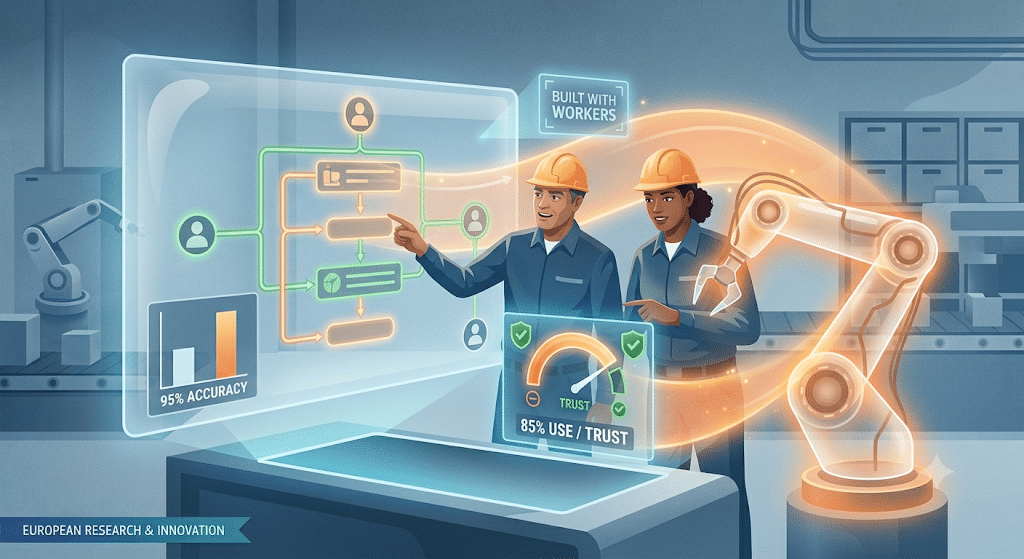
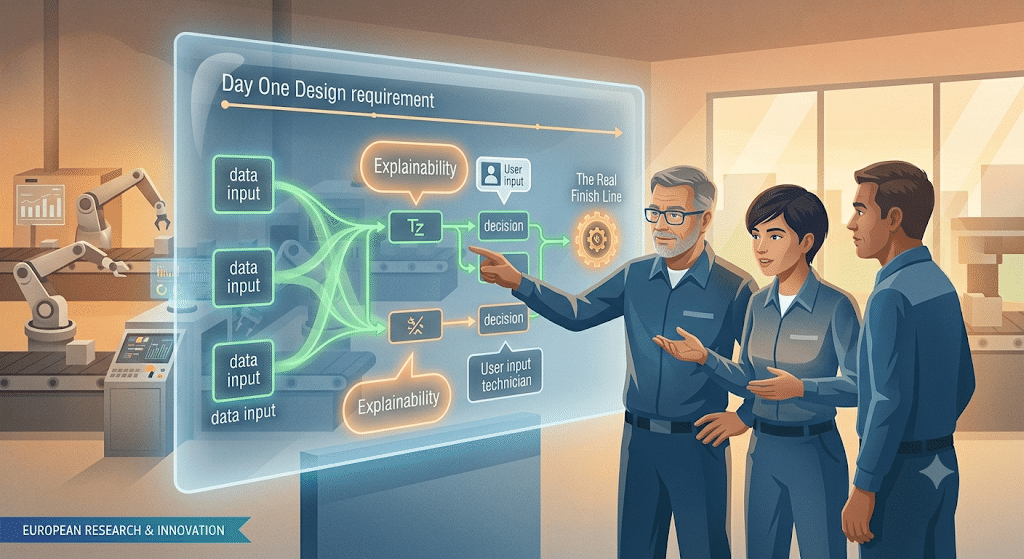
It would be easy to read all this and conclude the fix is simple: just add an explanation button. The book resists that shortcut. What comes through instead is that explainability has to be built with the people who’ll rely on it, not delivered to them afterward as a translation layer bolted onto a finished model.
There’s a useful way the researchers frame this: AI systems in a factory can operate with the human fully in the loop on every decision, with a human periodically supervising from a distance, or with a human retaining final command while the AI proposes options. None of these is automatically the right setup — the right level of human involvement depends on the stakes, the task, and, crucially, how much the people involved actually trust what’s in front of them.
That last part is easy to underweight if you’re only thinking about accuracy metrics. A 95%-accurate model that nobody trusts is worth less on a factory floor than an 85%-accurate model people actually use. The book doesn’t say this outright, but it’s the conclusion its own case studies keep pointing toward.
AI’s Other Divide: Who Can Actually Afford It
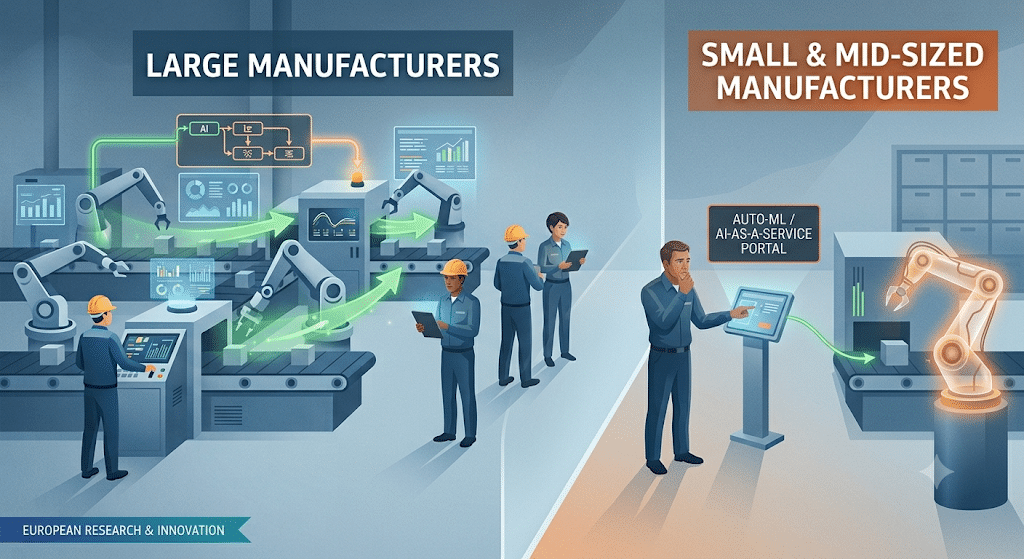
There’s a second theme threaded through the book that’s less dramatic than the trust question but arguably just as consequential: most of the AI success stories described here come from large manufacturers. Ford. Whirlpool. CNH Industrial, which runs more than 40 factories worldwide. These are companies with data science teams, dedicated budgets, and years of runway to experiment.
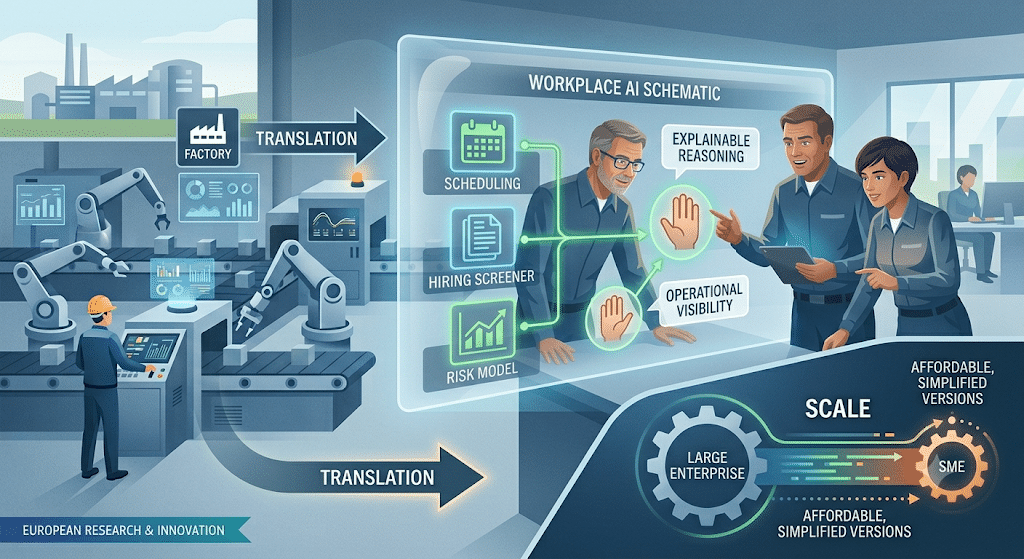
Small and mid-sized manufacturers don’t have that luxury. And the book treats this seriously enough to dedicate real space to it — describing efforts to build “AI-as-a-service” platforms specifically so smaller manufacturers can access these tools without building an in-house AI department from scratch, and AutoML systems designed so a plant manager or quality engineer, not a machine learning specialist, can configure a working model through a simple interface.
It’s a detail that’s easy to skim past, but it reframes the whole conversation. If explainability determines whether AI gets used once it’s installed, affordability determines whether it ever gets installed in the first place. Put those two problems together, and you get a much more honest picture of where industrial AI actually stands today — not “solved,” but navigating two very different kinds of adoption barriers at once.
Why This Matters Beyond the Factory Floor
You don’t need to work in manufacturing for these ideas to land somewhere familiar. Swap “operator” for “employee,” and “AI-driven production line” for pretty much any workplace tool that makes automated recommendations — a scheduling algorithm, a hiring screener, a financial risk model — and the same pattern holds. People don’t reject tools because the tools are wrong. They reject tools they can’t make sense of, especially the moment those tools disagree with their own judgment.
That has real implications if you’re the one introducing a new system, AI or otherwise, into a team. The book’s cases suggest that the return on investment isn’t just about model performance — it’s about whether the humans downstream have enough visibility into the reasoning to actually act on it. Skip that step, and even a genuinely good tool can quietly become shelfware, worked around rather than worked with.
There’s also something worth sitting with in the SME angle. It’s tempting to assume advanced tools like AI eventually trickle down to everyone at roughly the same pace. These case studies suggest otherwise — the organizations with the resources to experiment, fail, and iterate get further ahead, faster, while smaller players wait for affordable, simplified versions to catch up. That gap isn’t necessarily anyone’s fault. But it’s worth recognizing, especially if you’re evaluating vendors or tools for a smaller organization and wondering why the “enterprise-grade” version always seems to arrive first, and cheaper, elsewhere.
Where the Book Pulls Its Punches
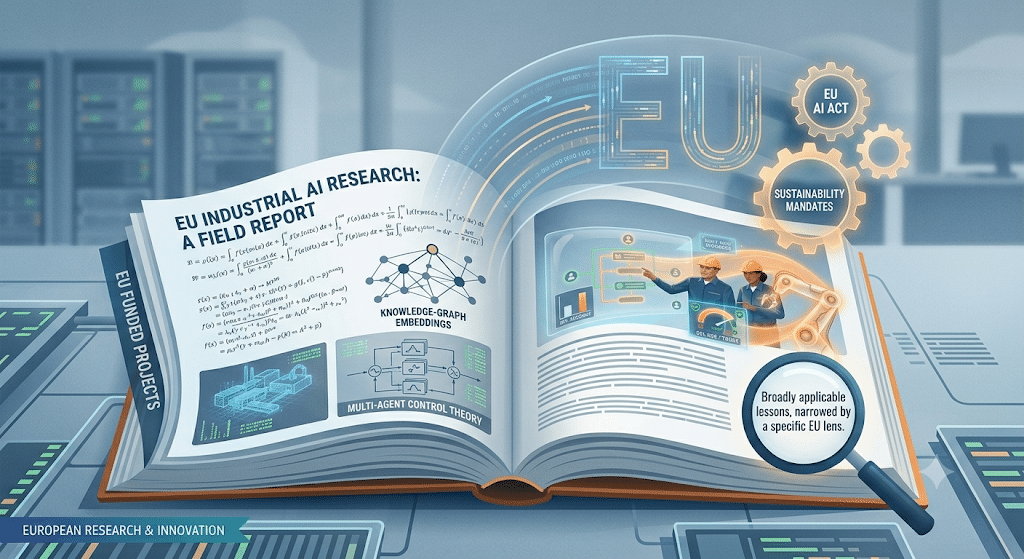
To its credit, this collection doesn’t oversell itself as a definitive theory of industrial AI — it’s closer to a compilation of in-progress research, and it reads that way. Some chapters are heavy on technical architecture and read more like conference papers than a cohesive narrative; readers looking purely for the human-trust storyline will need to skim past sections on knowledge-graph embeddings or multi-agent control theory to get there.
It’s also worth noting that nearly every project featured here was EU-funded and EU-based. The lessons about trust and explainability feel broadly applicable, but the specific regulatory backdrop — the EU’s AI Act, its sustainability mandates — shapes some of the design choices in ways that won’t map identically onto every industry or region. The book is upfront about this framing rather than pretending its findings are universal, which is a point in its favor, even if it does narrow the lens somewhat.
What Actually Sticks With You
Strip away the technical detail, and a few lessons survive the trip:
Trust in an automated system isn’t built once at launch — it has to survive the first moment the system tells someone something they didn’t expect to hear. That moment is where most of these deployments actually succeeded or failed.
Explainability designed after a model is built tends to feel like an afterthought, because it is one. The projects that worked best treated it as a design requirement from day one, shaped by conversations with the people who’d actually use the output.
And accuracy, on its own, was never the finish line in any of these stories. It was table stakes. The real work started after the model was already right.
A Question Worth Carrying Forward
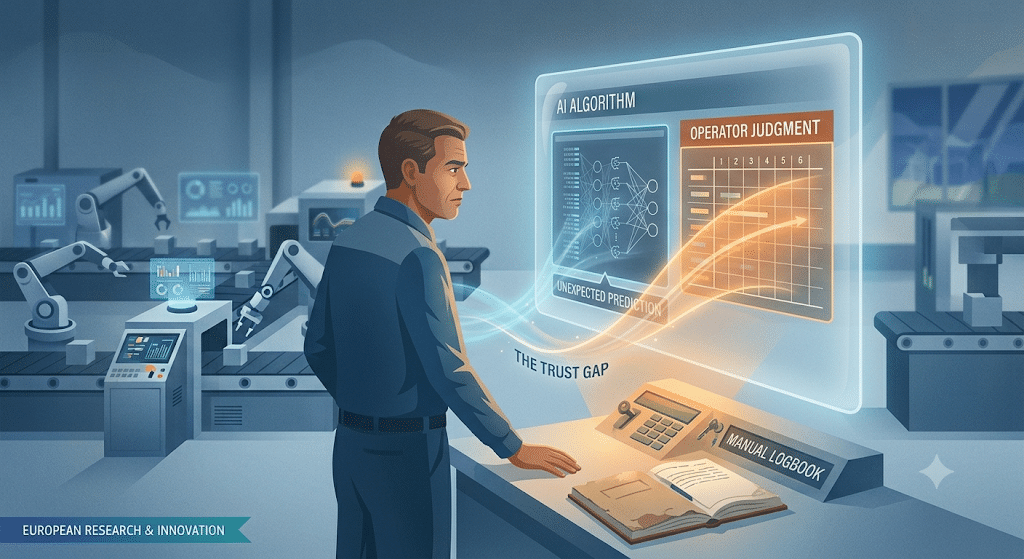
Somewhere in this book is a quiet, uncomfortable observation: the technology to build genuinely capable industrial AI has arrived faster than most organizations’ ability to make people trust it. That gap — not a gap in algorithms, but a gap in relationship — is where most of the real work in this field is apparently still happening.
So here’s a question worth sitting with, whether or not you ever set foot on a factory floor: the next time a system you rely on tells you something you don’t expect, do you dig in to understand why — or do you quietly work around it?
Read It. Explore It. Apply It.
Loved the ideas in this book?
There’s more to discover.
Testily.AI is trained on the principles and insights explored in books like this—helping you go beyond reading and explore how these ideas can apply to your own journey.
Continue exploring with Testily.AI
And if you’re hungry for more, discover our other book insights and articles.