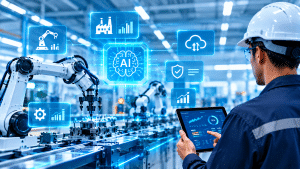


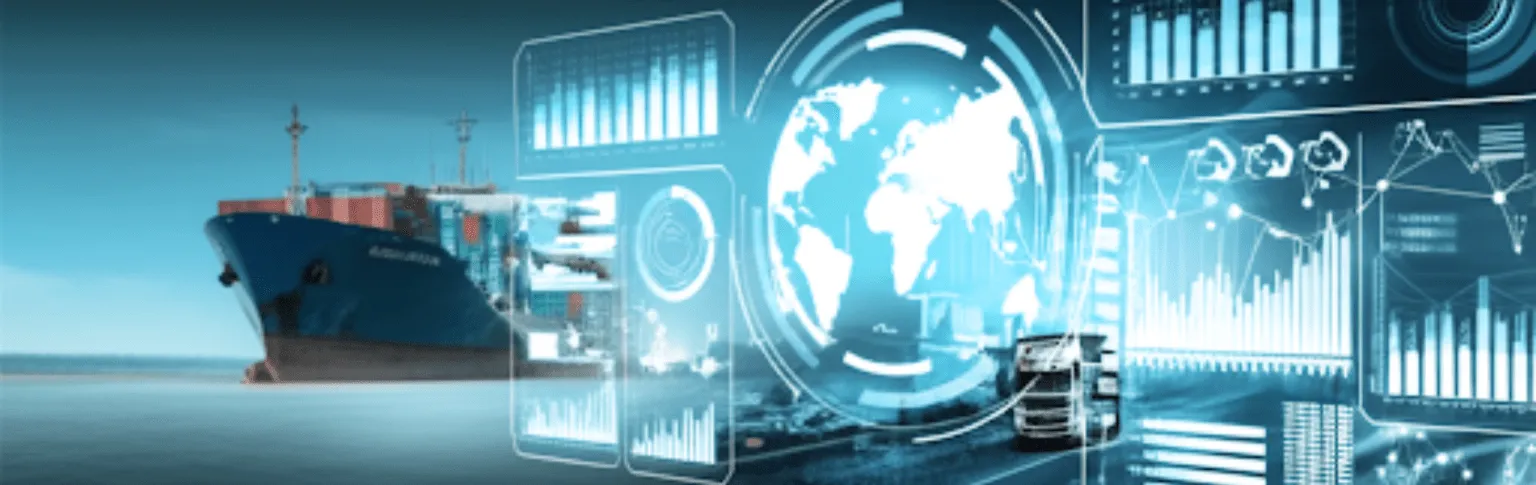
The realm of supply chain and logistics is transforming rapidly, in large part thanks to the relentless progress of Artificial Intelligence (AI). AI is no longer the future fantasy, it’s a force that’s driving how goods are sourced, manufactured and delivered, from accurately predicting what demand will look like in the future, to tremendous visibility throughout intricate networks.
For enterprises traversing the complexities of contemporary global trade, appreciating and adopting AI isn’t just a competitive edge; it’s an emerging imperative. Join us as we explore two major avenues that are being transformed by AI contributions in advanced demand forecasting and supply chain visibility improvements.
Predicting the Unpredictable: The Power of AI in Demand Forecasting
Traditional demand forecasting approaches heavily depend on historical data as well as statistical models, falling short in modelling the complexity of factors affecting consumer behaviour and market dynamics. AI, on the other hand, uses advanced machine learning algorithms to analyse huge datasets. Such as historical sales, economic indicators, social media sentiment etc. Weather patterns and even competitor activity AI uses all that to make much more precise and granular predictions of demand.
The benefits are substantial:
- Lower Inventory Expenses: Accurate demand forecasting helps companies avoid overstocking and under stocking, resulting in meaningful reductions in warehousing, spoilage and lost sales costs.
- Better Production Planning: Accurate forecasts allow for effective production scheduling, minimising lead times and optimizing resource allocation.
- Greater Customer Satisfaction: By providing what customers want, when they want it, companies develop loyalty and trust in their brand.
- Optimized Planning: With accurate demand forecasting, resources such as staff and transportation can be effectively allocated along the supply chain.
For example, a retailer may use AI to predict that cold weather will spur demand for winter coats in a particular area, based on an incoming cold front detected using weather data and environmental sentiment generated by social media. This enables them to proactively manage inventory and make sure they have the right product at the right place at the right time, maximizing sales and minimizing potential stockouts.
Through the Fog: AI in Supply Chain Visibility Like Never Before
Keeping end-to-end visibility across a complex and connected supply chain is a major challenge today. Discrepancies, disruptions, and bottlenecks can occur at any point in the process, resulting in costly delays and inefficiencies. Real-time insights into the movement of goods, inventory levels, and potential disruptions enable data-driven AI-powered solutions to revolutionize supply chain visibility.
AI achieves this through:
Real-time Tracking and Monitoring: Integrating data from IoT sensors, GPS devices, transportation management systems, to have a real-time view of shipments and inventory.
Anomaly Detection: Spotting abnormal behavior, like unexpected delays or temperature changes, for early crisis management.
Risk Assessment and Prediction: Disruptive events that can interrupt supply chains, including port congestion or political conflicts, can be predicted by analyzing data so businesses can formulate mitigation plans.
Machine learning for optimization: Analyzing historical and real time data with AI to determine alternative opportunities for route optimization, logistics efficiency improvement & reducing transportation costs.
Consider a pharmaceutical company using AI to monitor the temperature of sensitive vaccine shipments in real-time. If a temperature deviation is detected, the AI system can automatically alert the relevant stakeholders, allowing for immediate corrective action to prevent spoilage and ensure the integrity of the product.
The Future Powered by AI
Machine learning also helps lead a more sustainable supply chain and logistics toward real potential, instead of just optimizing existing methods. From self-driving cars and drone deliveries to smart warehouse management systems, such technologies powered by AI are reshaping the global supply chain into a more efficient, resilient, and responsive system.
The businesses that see the impact AI can make and invest in building and deploying AI supported solutions will definitely gain a competitive advantage in this changing landscape. Adopting this technological revolution is no longer just a choice; it’s the key to unlocking future success.